The Vagus Nerve: Your Body’s Pathway Back to Calm
The Vagus Nerve: Your Body’s Pathway Back to Calm
The vagus nerve is one of the most important communication pathways in your body. It acts as a two-way link between your brain and your organs, influencing digestion, recovery, immune function, heart rhythm, and emotional regulation.
Most importantly, the vagus nerve helps your body shift out of stress and into rest, repair, and regulation.
Simple breathwork is one of the most natural, accessible, and effective ways to influence vagal response.
In this article, we’ll explore how breathing stimulates the vagus nerve, why breathing patterns matter more than most people realize, and why methods like the Buteyko Method are especially powerful for long-term nervous system health. As a certified Oxygen Advantage instructor, I am both a practitioner and guide to the Buteyko Method.
Understanding the Vagus Nerve
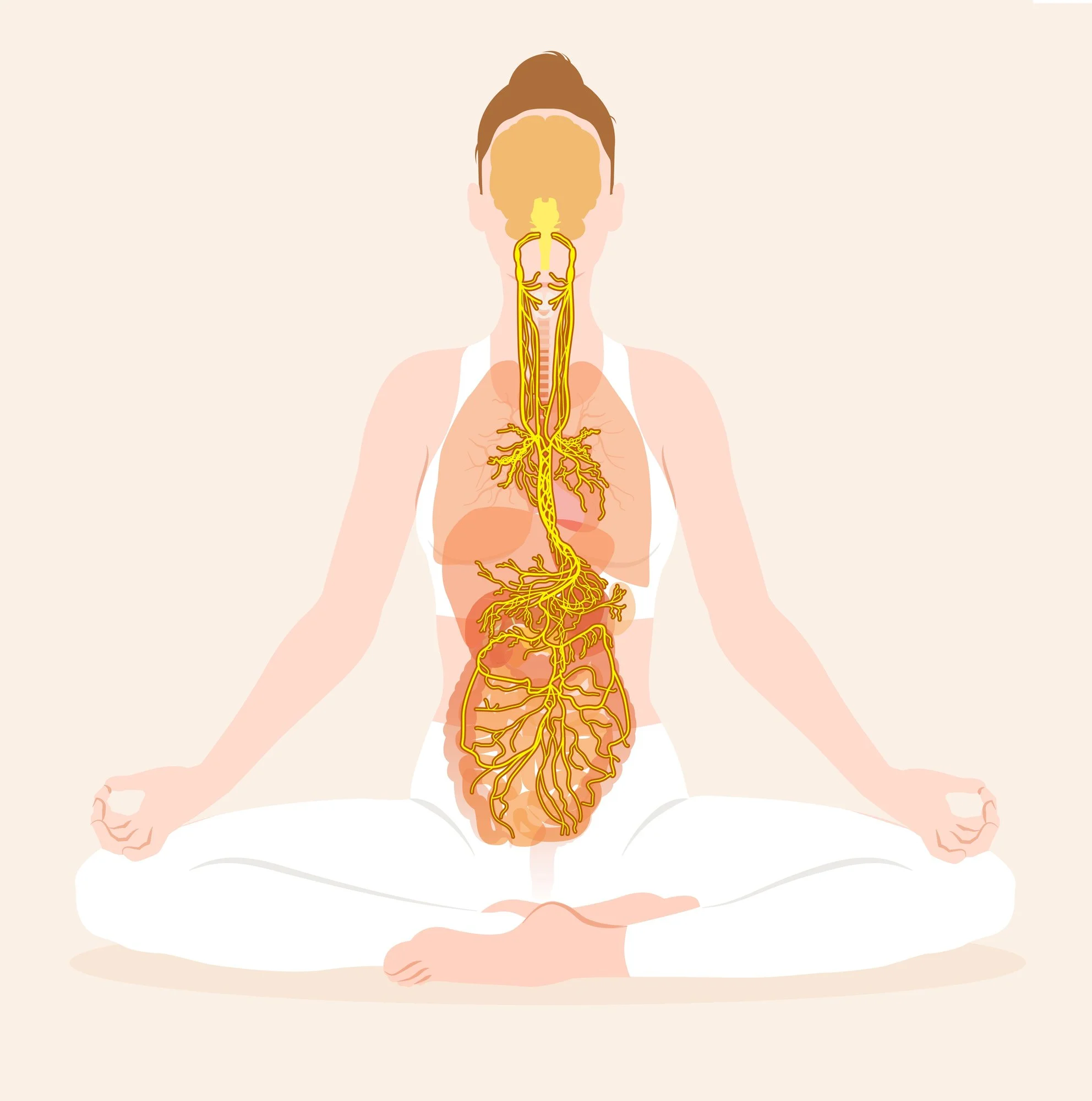
The vagus nerve is the longest cranial nerve in the body. It begins in the brainstem and travels down through the face, throat, heart, lungs, and digestive organs. (Fun fact: it shares the same root as vagrant – to wander.)
Its primary role is communication — carrying information from the body back to the brain and helping the brain regulate what’s happening below. Because of its wide reach, the vagus nerve influences:
Breathing and heart rate
Digestion and gut movement
Inflammation and immune response
Emotional regulation and stress recovery
The vagus nerve is the main nerve of the parasympathetic nervous system, the branch responsible for rest, recovery, and repair. You may have heard it as “rest and digest” as opposed to “fight or flight.” When this system kicks in, the body feels safer, calmer, and more resilient.
Research shows that healthy vagal function is associated with lower anxiety, improved mood, reduced inflammation, better digestion, and clearer thinking. It also plays a central role in our ability to feel connected and at ease with others.
One of the best indicators of vagal health is heart rate variability (HRV) — the natural variation in time between heartbeats. Higher HRV generally reflects a more adaptable nervous system. Lower HRV is often associated with chronic stress, anxiety, and fatigue.
Because the vagus nerve is deeply connected to both the heart and the lungs, breathing is one of the most direct ways to influence its activity.
How Breathing Activates the Vagus Nerve
Breathing affects the vagus nerve through several interconnected pathways involving heart rhythm, blood pressure, carbon dioxide levels, and the autonomic nervous system.
One of the most important relationships is between breathing and heart rate. When you inhale, heart rate increases slightly. When you exhale, heart rate slows down.
Slow, relaxed breathing strengthens this natural rhythm and increases heart rate variability, a key marker of nervous system resilience.
Longer, softer exhalations are especially important. The vagus nerve is most active during the out-breath. When the exhale slows, the body receivs a clear signal that it is safe to relax.
Breathing also influences pressure sensors called baroreceptors, located in large blood vessels near the heart and neck. These sensors monitor changes in blood pressure and send information to the brain.
Slow, steady breathing creates smooth, rhythmic changes in blood pressure, which activate the baroreflex, dampening the stress response.
Carbon dioxide plays an important role as well. Gentle, light breathing allows CO₂ levels to rise slightly, which improves oxygen delivery to tissues and supports nervous system balance. While this can feel unfamiliar at first, the body adapts with practice.
The diaphragm is another key piece. It is physically connected to vagal pathways. Slow diaphragmatic breathing gently stimulates the vagus nerve, helping to slow the heart rate and calm the nervous system.
In short, breathing through the nose, breathing slowly, and breathing lightly all work together to increase vagal tone and support regulation.
Why Breathing Patterns Matter
Breathing isn’t just something you do — it’s something your nervous system learns.
Many breathing techniques can temporarily stimulate the vagus nerve, but what matters most is what happens outside of practice: how you breathe while resting, moving, working, and sleeping.
This is where the Buteyko Method is so helpful.
The Buteyko Method and Vagal Health
The Buteyko Method was developed in the 1950s by Dr. Konstantin Buteyko, who noticed that many people with chronic health issues were breathing more than their bodies actually needed.
This pattern of chronic over-breathing keeps the nervous system in a subtle state of stress. It lowers carbon dioxide tolerance, disrupts oxygen delivery, and suppresses vagal activity.
Rather than focusing on big, exaggerated breaths, the Buteyko Method retrains breathing to become slower, lighter, and nasal — not just during exercises, but throughout the day and night.
This is what makes it especially powerful for nervous system regulation.
The method supports vagal tone through several core principles:
Nasal breathing, which slows airflow, increases nitric oxide, and supports parasympathetic activity
Light breathing, which reduces breathing volume and gently increases CO₂ tolerance
Slow breathing, often around five to six breaths per minute, which synchronizes heart rate, breathing, and blood pressure
Diaphragmatic breathing, which mechanically stimulates vagal pathways and supports relaxation during exhalation
Over time, breathing becomes quieter, more efficient, and less reactive. And vagal stimulation doesn’t end when the exercise ends — it continues through daily life.
Practical Ways to Stimulate the Vagus Nerve with Breathing
Here are simple, effective ways to support vagal function through breathing:
1. Slow the breath
Breathing at around five to six breaths per minute helps synchronize heart rate and blood pressure, activating the baroreflex and increasing vagal tone. You can use an app like Paced Breathing to help set the pace.
2. Breathe through your nose
Nasal breathing naturally slows the breath, supports nitric oxide production, and reduces over-breathing. Mouth breathing tends to weaken vagal influence and lower CO₂ levels. Doing this while walking and light exercise (if it is comfortable) can be especially powerful.
3. Breathe lightly, not forcefully
Effective “deep” breathing is slow and soft, not big or exaggerated. Reducing breathing volume slightly supports CO₂ balance and nervous system calm.
4. Lengthen the exhale
The vagus nerve is most active during exhalation. Letting the out-breath flow a little longer than the in-breath naturally shifts the body into a parasympathetic state. There’s no need to count – just slightly increase the exhale throughout the day.
Humming can be especially helpful, as it slows the exhale and creates gentle vibrations that stimulate vagal pathways.
5. Use the diaphragm
Allow the lower ribs and abdomen to move naturally with the breath. Diaphragmatic breathing engages the vagus nerve more effectively than shallow chest breathing. You can put your hands on your rib cage, bring your attention to the sensation, and become accustomed to the ribs slightly expanding.
6. Add gentle breath holds
Short, comfortable pauses after exhalation can increase CO₂ tolerance and vagal activity. These should always feel calm and controlled, never forced. One easy exercise: take normal breaths in and out through the nose for 10-15 seconds, then on an exhale, hold the breath for 3-5 seconds. Repeat for 1-3 minutes.
7. Practice throughout the day
The vagus nerve responds best to consistency. Calm, nasal breathing during daily activities gradually retrains the nervous system to stay regulated.
A Simple Buteyko-Style Breathing Exercise
Use this practice to support vagal activation and nervous system balance:
Sit upright and allow your shoulders and face to soften.
Close your mouth and breathe quietly through your nose.
Inhale gently for about four seconds.
Exhale slowly for about six seconds.
Let the ribs and abdomen move naturally; keep the chest relaxed.
Slightly reduce the amount of air you breathe until you notice a mild, comfortable need for air.
Maintain a slow, steady rhythm of five to six breaths per minute.
Continue for four to ten minutes without forcing the breath.
Practice once or twice a day, especially during stress or before sleep. That gentle sense of air hunger is a sign that CO₂ tolerance is improving and vagal pathways are being supported.
___
Sheila Gallien is a Certified Clinical Hypnotherapist and OA® Functional Breathing Instructor. She combines hypnotherapy with functional breathwork, somatic practices, and intuitive wisdom to rewire anxiety at its root—in your nervous system, your subconscious patterns, and your body's memory. Learn more at www.droppingintopower.com